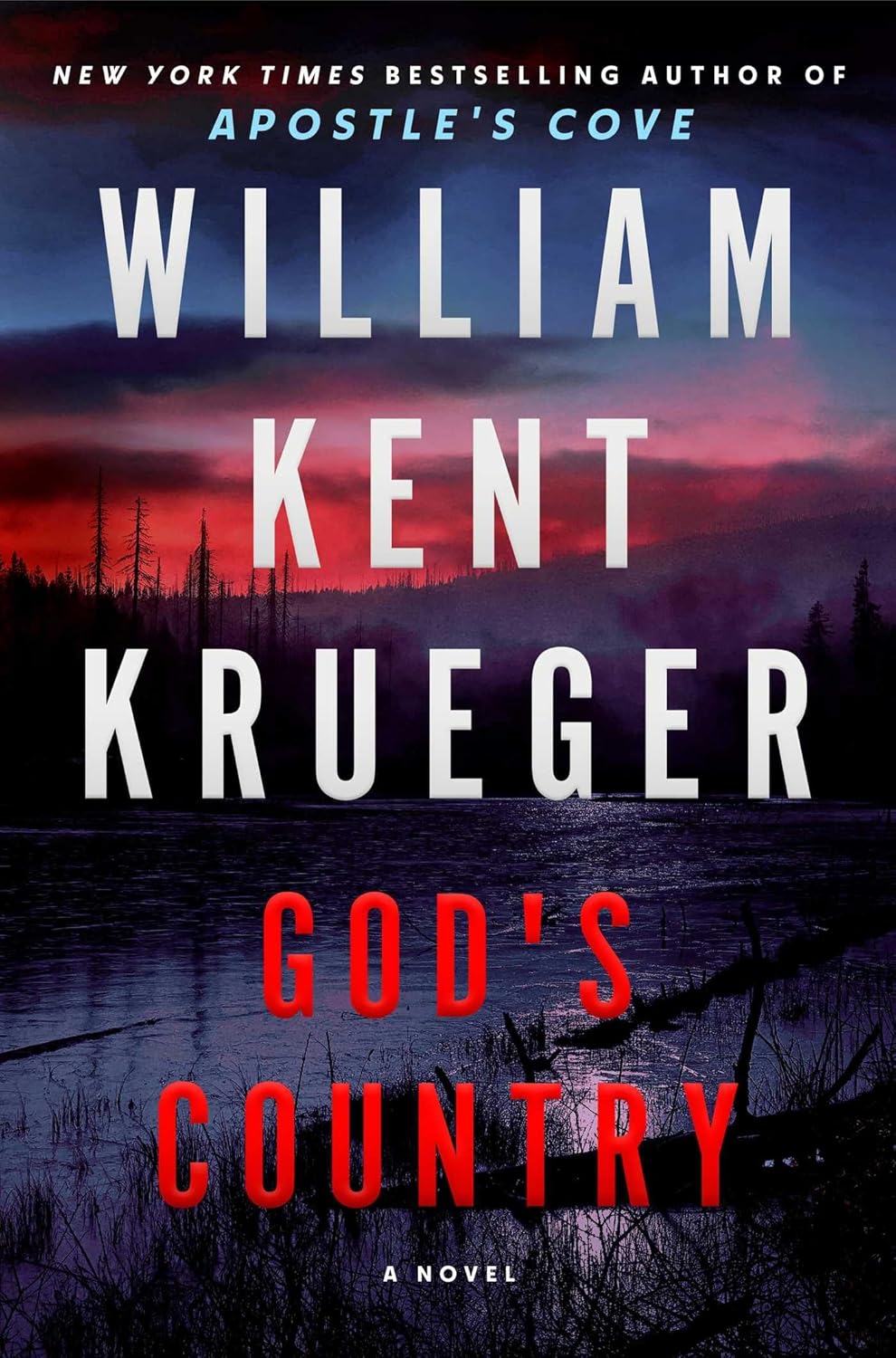
A Cork O’Connor Mystery Novel – Book #22 | On Sale Now
Order the Book
Atria Books Hardcover 2026, ISBN 978-1668231869
DESCRIPTION
From the New York Times bestselling author of The River We Remember, a new mystery in the wildly popular Cork O’Connor series.
Cork O’Connor, preparing for a family trip into the Boundary Waters, is troubled by ominous visions about his future. Ignoring the warnings, he uncovers signs of violence while searching for his missing friend, Cordell Bishop. Soon, he is forced to negotiate with dangerous criminals, the Kennedy brothers, who are seeking their late father’s hidden stash.
Facing escalating danger and difficult choices, Cork grapples with his darkest instincts as he helps others escape and eventually takes justice into his own hands. God’s Country is an action-packed thrill ride that will keep readers on the edge of their seats.
PRAISE
New York Times Bestseller
USA Today Bestseller
EXCERPT
Chapter 1
I often wonder about the plan of the Creator. I’ve seen enough cruelty in this world to understand why some people don’t believe in the Great Spirit. Life is just what it is, sometimes good, sometimes bad, and there’s no rhyme or reason, no unseen hand pulling strings. Everything is simply luck of the draw. Then I look at the face of my wife, Rainy, or my children, or my grandson, and I see the true heart of the Creator reflected there. But I know that I’m one of the lucky ones. Not everyone, as you will see, is so blessed.
Cork O’Connor is my name. I live in Aurora, Minnesota, a small town at the edge of the Boundary Waters Canoe Area Wilderness, a million acres of pristine forest, lakes, and fast-running streams and rivers. Across the border in Canada is the Quetico, another million acres of the same. People call this God’s country. It’s a spiritual place, absolutely. But sometimes things happen here that seem to run con-trary to the nature of the Divine. The event I’m about to relate is one of those things.
It all began on a Saturday with a vision. Two really, neither of them mine. I’m not much gifted in that way. But my son, Stephen, and my grandson, Waaboo, have been given this ability, which they don’t necessarily view as a gift because what they see is usually a forecast of something dark and dangerous.
Waaboo came down to breakfast that morning looking troubled, his black hair tousled from a restless sleep. He was not quite eight years old. He plopped himself down in the chair between his parents. He sat mute, his chestnut-colored eyes staring at the scrambled eggs and toast and mixed fruit Rainy and I had prepared for everyone. The rest of us—Waaboo’s dad, Daniel; his mother, Jenny, who is my daughter; Rainy; and me— had only just seated ourselves at the breakfast table in the kitchen, and I greeted him with “Boozhoo, Noozhishenh,” which is Ojibwe for “Hello, Grandson.”
He took a moment to respond, as if still coming out of his night’s dreaming.
“Boozhoo, Baa-baa,” which is what he’s called me ever since he was a very small child and couldn’t pronounce “Grandpa.” His voice seemed raw, his words croaked more than spoken.
“Are you okay? You don’t look well.” Jenny felt her son’s fore-head.
“Not sick,” he said, pulling away from her hand. “I had a bad dream. I saw a wolf in a forest.”
“We’re Wolf Clan,” I said. “That should be a good thing.”
Waaboo shook his head. “There was something wrong with this wolf. He wasn’t a good wolf. He was like a monster wolf.”
“What was he doing?” Jenny asked.
“There was a man on the ground and the wolf had torn his chest open with his teeth and claws and he was eating the man’s heart.”
Now Daniel seemed almost as troubled as his son. “Did you know the man?”
Waaboo nodded. “Uh-huh.” “Who was it?” Daniel asked.
Waaboo looked my way. His little face scrunched up as if this monster wolf was right there between us. “It was you, Baa-baa,” he said, his small voice nearly cracking. “It was your heart the wolf was eating.”
“He sees things, I know,” Daniel said. “But sometimes dreams are just dreams. We all have bad dreams on occasion.”
“Waaboo’s dreams are different,” Jenny said in a stone-cold voice.
The little guy was no longer at the table. He’d said he didn’t feel like eating and was going back upstairs to his room for a while. Jenny offered to go with him, but he said he wanted to be alone. Sometimes, after he’s had one his visions, he does this so that he can process the difficult revelation. Occasionally, he needs help doing that, and when that happens, we take him to see Henry Meloux.
Rainy had been quiet through much of the conversation. Now she gazed at me with a clinical look in her eye. She was trained as a public health nurse. She’s also a member of the Grand Medicine Society, so an Ojibwe healer. “How are you feeling?” she asked.
“Right as rain,” I said.
“Still, the vision may be about your health.”
“If it is a vision,” Daniel said. He’s a cop, an officer with the Iron Lake Tribal Police. The nature of his job causes him to look at the world in a more concrete way. I get this. I was a cop for years, and the realities of what you deal with in that job tend to shape your thinking along more solid lines.
“Take your badge off,” Jenny said, “and think like an Anishinaabe poet.”
Which Daniel is. Published and with awards. He also plays the accordion. So, probably not your normal law enforcement officer.
“Waaboo’s clearly upset,” she went on. She looked at me in much the same way Rainy had. Clinically. “Don’t dismiss what he’s seen as a bad dream, Dad. When was the last time you had a checkup?”
Age sixty is in my rearview mirror now, but when I was a much younger man, I ran the Grandma’s Marathon in Duluth, twice. I wasn’t among the front runners, but I finished in the middle of the pack. I still run fairly regularly and bike and canoe and play basket-ball with a bunch of guys like me. We call ourselves the Old Mar-tyrs. So I think of myself as being in pretty fair shape, and I told my daughter this.
“You didn’t answer my question. When was your last checkup?” “I don’t remember. A year ago, maybe.”
“You saw a doctor when you got beat up at Sam’s Place last fall,” Rainy said.
I’m a private investigator and I was working on a murder case, actually a cold case that I’d first investigated when I was sheriff of Tamarack County twenty-five years earlier. I’d ruffled feathers during that second investigation and got bruised ribs and a slight concussion for my efforts. I’d been seen in the emergency room and sent home with ibuprofen.
“I’m sure he didn’t check your heart very carefully,” Rainy added. “He was more interested in your head.”
“Which is pretty hard,” I reminded her, giving my noggin a little thump with my knuckles. “No lasting ill effects.”
“You’re about to head into the Boundary Waters for several days. No clinics around the corner there,” Rainy said. “Please, see a doctor.”
“See a doctor,” Jenny said.
I glanced at Daniel, who gave a shrug, signaling defeat. “See a doctor,” he said.
CHAPTER 2
We were nearing Memorial Day, and a large family gathering had been planned. My son, Stephen, and his wife, Belle, were coming up from St. Paul. My sister-in-law, Rose Thorne; her husband, Mal; and
their son, Luke, were coming from Evanston, Illinois. We try to get together a few times each year, and Memorial Day is usually one of those times. It’s an opportunity to visit the graves of those we’ve loved but have lost, to place flowers there, and to share memories. The stories we tell are poignant, sometimes quite funny, and though we’ve heard them many times, they still have the power to bring back among us a sense of those beloved spirits. It’s a tradition I’ve always valued.
That year, as part of our gathering, the men of the families were planning a trip to the Boundary Waters Canoe Area Wilderness, and the boys would go along. Luke was a little younger than Waaboo. This was to be his first time in the great wilderness. Mal had told us over the phone how excited Luke was. I was pretty stoked myself. I love the Boundary Waters and have always found that time spent there is a soul-cleansing experience. A Boundary Waters trip creates a memory for a lifetime, especially if it’s your first visit. I know how sexist this sounds, but I was pleased at the prospect of an all-male excursion, an opportunity to guide our boys into an early under-standing of how to navigate successfully that kind of adventure, with all its challenges. The wilderness can be a dangerous place for the ill-prepared. Waaboo had been there on several trips. He’d already been initiated, was beginning to feel comfortable with the hardships. I hoped that Luke would end up feeling the same way.
They arrived in the late afternoon and we greeted them warmly, hugs all around. Waaboo and Luke went immediately to Waaboo’s room, which they always shared during a visit. The two boys got on well. By then, Waaboo had put his nightmare behind him. He’s pretty resilient that way.
“Good trip?” I asked.
“The roads were busy,” Mal said. “Holiday traffic.” Jenny said, “I love that top, Aunt Rose. Tie-dyed.”
“One of the women who used to live at the shelter has started her own business. I thought I’d help. And it is fun, isn’t it?” she said, looking down at herself.
For many years, during my marriage to my first wife, Jo, Rose had lived with us in the house on Gooseberry Lane. Rose and Jo were sisters, and when our kids were young and Rose still single, she helped us to manage raising the family while Jo continued her law practice and I was a deputy and then sheriff of Tamarack County. She lived in our attic, which I’d made over into a large bedroom. In those days, Rose was a plain woman in appearance, with no prospects of marriage. She was, and still is, a devout Catholic. While she lived with us, she often considered the idea that when her help was no longer needed in the O’Connor house, she would enter a religious order. Rose has a huge heart and a fine mind and, in those days, a love of bodice-ripper books. When Mal Thorne came into her life, every-thing changed, including how she saw herself. It was like something out of those romance novels she read so voraciously. Love remade Rose. In her own mind, and in the eyes of those who cared about her, she became beautiful.
Mal, for a while, was our priest at St. Agnes in Aurora. He was a man already weakening in his embrace of the dictates of the Church, a man on the verge of becoming a cliché, a priest with too many doubts and too great a taste for liquor. In the strange way of the Creator, whose ultimate purpose is always beyond our abil-ity to understand completely, Mal and Rose were brought together by a madman, a killer. That brush with death opened the door for both of them to see their futures differently and for their paths to merge. After Mal left the priesthood and married Rose, they moved to Evanston, where together they took over the running of a shelter for battered women and their children. They were two of the kindest people I knew.
We were settling down on the front porch in wicker chairs, with tumblers of sun tea Rainy had made, when Stephen and Belle ar-rived. My son had just finished his second year of law school. His wife, Belle, who is Ojibwe, was already an attorney, working in the area of Indigenous rights. They popped up to Aurora whenever they could, which in my opinion wasn’t often enough. But children grow up and have their own lives, right? The warm greetings we’d exchanged on the arrival of Rose and Mal were repeated. Stephen carted luggage into the downstairs office, where I’d put a futon for him and Belle to sleep on whenever the whole clan gathered. It was a little cramped, but they never complained. Rainy offered them both sun tea, and they joined us, taking the porch swing, whose chains squeaked a little as they rocked back and forth.
The sun was dropping in the western sky, which was as pure blue as a sapphire. We sat half in shade and half in sunlight, catching up. To my thinking, there’s nothing better than a gathering of family, especially if the love runs deep, and in ours it does. But I noticed Stephen casting furtive glances my way, and whenever he did, he looked worried.
Finally I said, “Is something wrong, Stephen?”
He hesitated. Then Belle said, “You need to tell him.” “Tell me what?” I asked.
“We’ll talk later, Dad.”
“Something you can’t share with everyone?” “Tell him, Stephen,” Belle said.
“Yeah,” I said. “Tell me.”
Stephen took a deep breath. “I saw something.” “A vision,” I said.
“Yeah.”
“Let me guess. A wolf eating my heart.”
He looked at me, his surprise obvious, then the light of under-standing came into his eyes. “Waaboo’s had the same vision.”
They don’t always see the same things. When they do, it’s best to take the vision seriously.
“My heart’s fine,” I said.
“Maybe it’s about something else, Dad.”
Having two members of my family, both gifted in this unusual way, I’ve come to learn that visions are a tricky business, their mean-ings seldom clear on the surface. Sometimes, you need to have them interpreted.
As if reading my mind, Stephen said, “We should talk to Henry.” “We’ll talk to Henry tomorrow,” I said. “In the meantime, I’m going to have a beer. Anybody else want a Leinie’s?”
After dinner, while the rest of the folks gathered around the dining room table for a rousing game of Uno, I went to check on Sam’s Place. It’s a burger joint on the shore of Iron Lake that I’ve owned for twenty years or so. It was left to me by Sam Winter Moon, a Shinnob who’d been my father’s good friend, and then mine. As they grew up, all my children spent time working there. The first employment for lots of young people in Tamarack County has been at Sam’s Place. They’ve gone on to college, some of them, established their own lives, and now they often bring their children back for a Sam’s Special or a Waaboo burger, fries, and a shake.
That evening Brittany Pennington was in charge and would close up. She’d finished high school only days before—I’d gone to her graduation ceremony and the party afterward—and would be entering Macalester College in St. Paul come fall. She was bright and reliable, and her father had worked for me in his youth.
We weren’t far from the summer solstice. At nine o’clock the sun had just set, and the sky in the west looked as if it was lit by orange flames from a fire below the horizon. When I parked in the gravel lot, I could see the surface of Iron Lake backing the old Quonset hut that Sam Winter Moon had repurposed long ago and that I have altered yet again to include an office for the business of my investigative services. The surface of the water was the color I imagined molten lava to be, but I knew that if I were to dive in, that lake water would chill my bones.
I checked in with Brittany and her crew, all fine kids. It had been a busy evening, she reported, pretty typical for a Saturday night, but she didn’t need my help in closing up. I left her to the job I knew she and the others would do well, and I wandered along the shoreline.
Except for a few years in Chicago after I trained as a cop and worked the South Side there, I’ve lived in Aurora all my life. In a way, it is my life. All that I’ve ever held dear is tied to this place, memories that play in my head like scenes from a comforting old movie. Many of those I’ve loved with all my heart have been laid to rest in this pine-scented Eden. My grandparents, my folks, my first wife, one of my children. I can’t imagine ever leaving Tamarack County. Except in death, which eventually sets us all on the Path of Souls.
As I stood on that familiar shoreline, with the streetlights of town starting to flicker and glow at my back, the sky above me and the lake before me both beginning to turn deep amethyst, and a soft breeze warm with the promise of summer kissing my cheek, my heart gave a sudden flutter. It was like nothing I’d ever felt before, lasting only a few moments, then gone. It wasn’t something born of emotion but was very much physical. As the day became dusk, the light fading, I found myself thinking, with just the slightest bit of alarm, of the vision that had been visited upon Waaboo and Stephen, the nightmare of a monstrous wolf feeding on my heart.
Copyright © 2026 William Kent Krueger
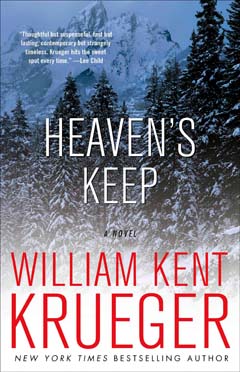
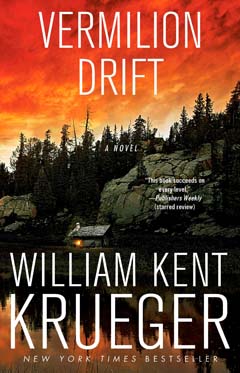
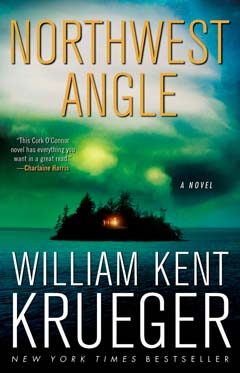
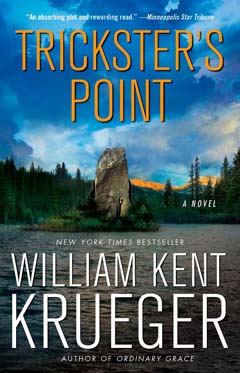
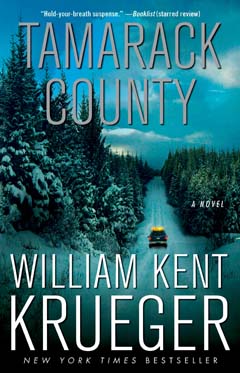
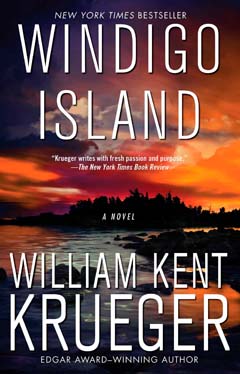
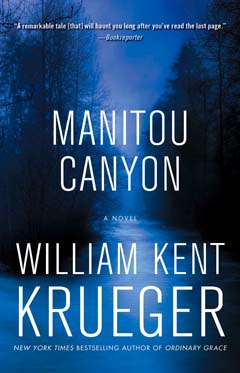
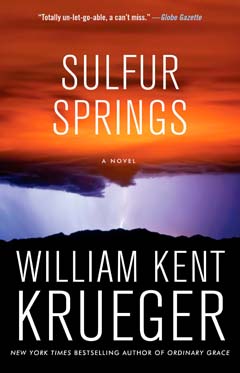
The Cork O’Connor Mystery Series